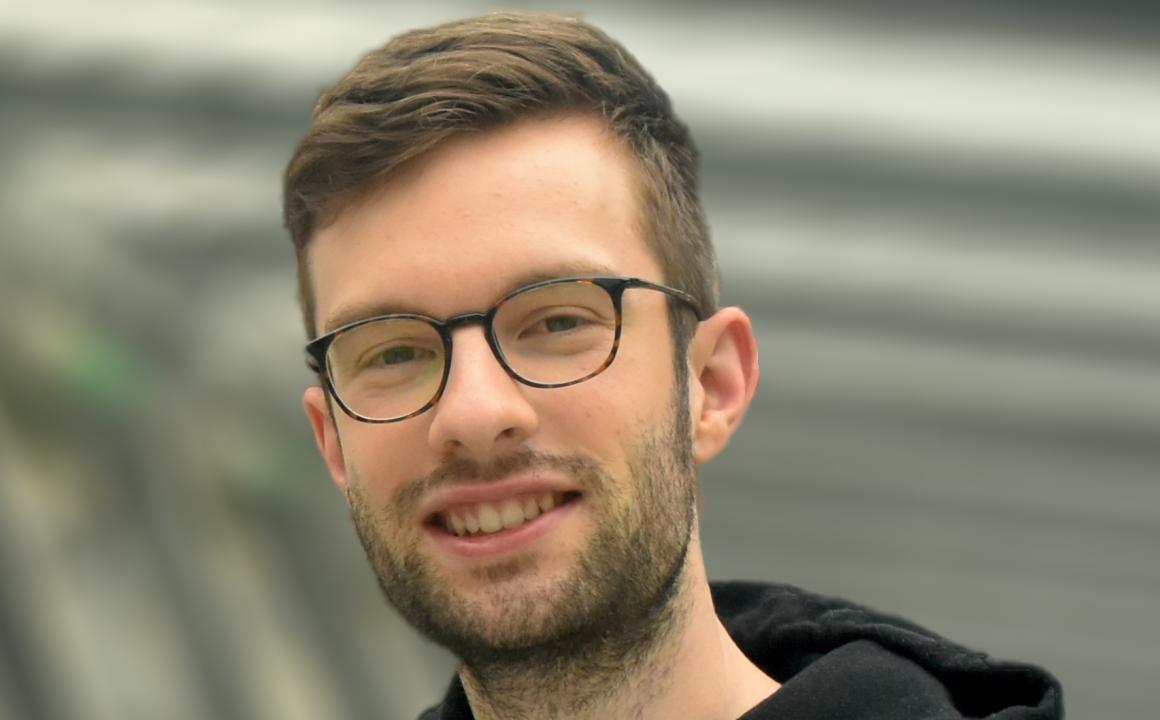
The startup Siwalu participated in the accelerator program of the Digital Hub münsterLAND in 2019 and was subsequently able to enter into a partnership with Snap Inc. Today, in an interview portrait, Tabea wants to know how the partnership came about and what has happened since then. To the interview:
Siwalu develops AI-based animal recognition apps for dogs, cats, and horses. The app for recognizing dog breeds is particularly successful. Snap Inc. is a US technology and social media company and also the developer of the instant messaging service “Snapchat,” which has over 12.5 million daily active users in Germany (as of April 2021).
As a former accelerator startup, we are of course very pleased that you have entered into a partnership with Snapchat. Tell us, how did that come about?
To start at the beginning: The whole thing started as a leisure project without any major economic motives. We were then able to gain a lot of users very quickly without having to invest a lot of financial resources. I think that was exactly the key point that led to an email from Snapchat arriving one day, expressing interest in our product and asking if we would like to talk about it.
How do you think Snapchat became aware of you?
I can't answer that exactly. But I'm pretty sure they regularly screen the market for interesting products.
There was also a clear use case for which they were looking for products, and since we already had many thousands of users at the time, they probably became aware of our Dog Scanner app and thought: That sounds exciting, let's take a closer look.
Okay, so you had a lot of users, Snapchat discovered you, and then what? How does a process like that work, and how do negotiations with a giant from the US go?
It's hard to say how it normally works, because I'm afraid our case was rather atypical. The problem was that we hadn't even been founded at the time. That meant we weren't in the best position to go into such a conversation, of course. The whole thing was new to Snapchat, too. At the time they contacted us, their own product - the Snapchat Scan - didn't even exist in its current form yet.
Snapchat was still in the discovery phase and had to evaluate ideas.
When they first launched Snapchat Scan, we weren't initially presented as a partner alongside Shazam, Photoshop, and Amazon due to the lack of a foundation. But it worked out the following year.
But you were already in the app at that point?
No, that wasn't possible at the time because we couldn't sign the contract without a foundation. Before that happened, there were long negotiations, and then COVID-19 got in the way, which is why we first had to postpone and then cancel the presentation in Los Angeles.
So, in the end, it took about 1.5 years - from the initial contact to the final presentation.
And what did Snapchat particularly value during the process with you? What was important to them?
Snapchat was primarily interested in the technology and ensuring that the team was a good fit. They also emphasized the importance of a professional and long-term partnership. That's why we founded the company very quickly, in the hope that it would be ready for the 2019 launch.
How are you actually used in the app?
Initially, we were introduced for the Snapchat Scan product. This works by allowing you to scan various things on the camera screen by holding down the touchscreen. In addition to our animal recognition, there is now also music recognition from Shazam, plant recognition, food recognition, car recognition, product search via Amazon, and the ability to solve math equations.
How does a small startup hold its own against such a giant from the US?
Of course, you have to be honest and say that Snapchat's approach is decisive. Nevertheless, they approached us first, so we knew that there was mutual interest. That's why it was always relaxed, and the discussions with Snapchat were pretty casual, and they were very understanding toward us.
Did the partnership give you a boost in retrospect? I mean, you were mentioned alongside names like Shazam and Amazon.
Definitely. Just having the experience was something very nice on a personal level, something that helped us move forward. Financially, it was also worthwhile, of course (laughs).
I believe so! Where are you now, and what are your plans for the future?
After the 2020 partner conference, we decided that we had reached a kind of peak and wanted to seek new challenges after almost 3.5 years of developing animal recognition technology. That's why we ceased active operations at the end of last year. However, the company still exists and the apps are still available in the stores.
What are your plans for the future? Do you want to become serial entrepreneurs?
We'll see. I can definitely imagine starting another company. My co-founder Tim has since found a “normal” or traditional job (laughs). Maybe I can convince him to start another company with me.
So your team worked well together?
Absolutely! I was really lucky there. I was able to start the company with a friend I had known for a long time, who is not only a great person but also outstanding in his field, so it worked out really well.
What do you think is important in a team constellation?
It was very helpful that we complemented each other in the founding team. Tim took care of the technical side and I took care of the business side. Even later on, when we had a few employees, it was important to us to maintain positive and close contact.
For me personally, the social environment at work is the most important factor. In other words, enjoying going to work and having fun with each other, treating each other as equals, and getting along well.
So flat hierarchies, a good team culture, and a certain ability to take criticism are crucial?
Competence can't hurt either, of course (laughs).
What was relevant in the early stages of founding your company, and what helped you?
We had the advantage of being able to bootstrap the whole thing without much financial risk, were already in negotiations with Snapchat at the time of founding, were in contact with other corporations, and had many users.
How do you assess the startup ecosystem in Münster?
A lot has definitely happened since we started three years ago. We participated in your accelerator program at the time and were in the Gründergarage. We had a free office there. Both of these things were very beneficial to us - among other things, because they gave us the opportunity to exchange ideas with many other startups. However, we did miss the B2C focus a little.
Do you have any advice for a startup that wants to win a large (pilot) customer?
A good product (laughs). All the large companies that contacted us did so on their own initiative. Probably because we already had a lot of users and a pretty good product.
I think that actually comes naturally when you're in the B2C sector and manage to inspire lots of people with a very good product.